


Microbial Diversity & Ecosystem Functioning
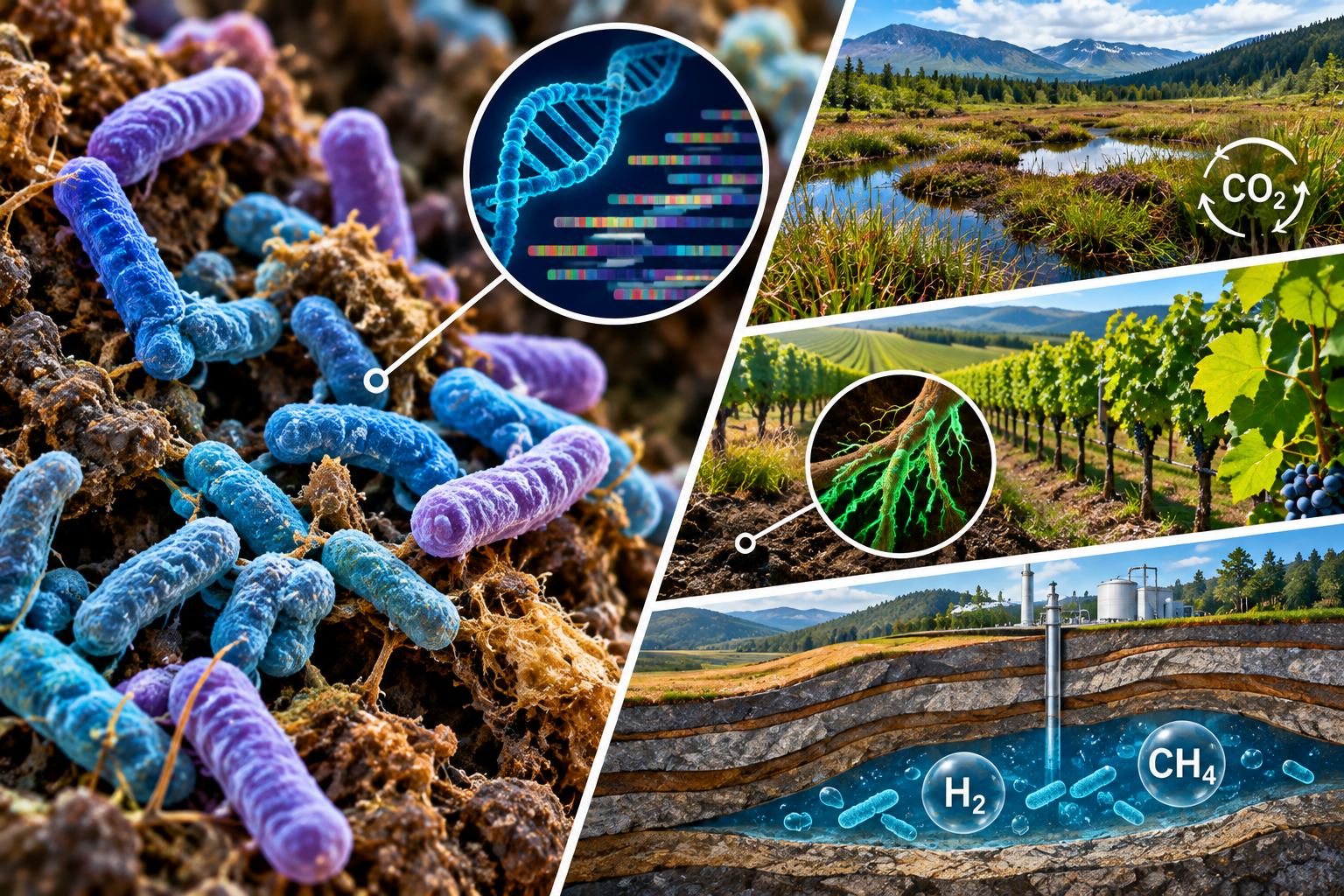
IPREM investigates the diversity, metabolic functions and adaptive responses of microbial communities in natural and human-impacted ecosystems.
Research focuses on the role of microorganisms in biogeochemical cycles, their responses to environmental contamination and climate change, and their contributions to ecosystem health and resilience. Combining microbial ecology, molecular biology, genomics and environmental chemistry, these studies address challenges ranging from sustainable agriculture to the environmental implications of underground gas storage.
Microorganisms play a central role in biogeochemical cycles, including carbon cycling in peatlands, and contribute to ecosystem responses to global environmental change.
IPREM investigates the metabolic and genomic versatility of microbial communities, focusing on their adaptation to environmental stress, contamination and climatic disturbances. Research has notably explored integrons as genetic markers of microbial adaptation to environmental stress.
An innovative approach combining CRISPR-Cas9 enrichment with long-read nanopore sequencing has been developed to investigate microbial genetic diversity and adaptive mechanisms.
Studies have also characterized the responses of microbial communities to multiple contaminants, including organic pollutants and metals, in human-impacted environments, as well as their responses to climatic events.
These investigations have contributed to the development of robust functional bioindicators to support ecological assessment and environmental management.
IPREM investigates the role of microorganisms in the health, functioning and resilience of agricultural ecosystems, including vineyards and crops such as potatoes, maize and chestnut trees.
Research combines microbial ecology, plant pathology and analytical chemistry to understand interactions between plants, microbial communities and their environment.
Particular attention is given to vineyard ecosystems, where microbial communities and plant diseases are studied to better understand factors influencing crop health and resilience.
These activities are supported by industrial collaborations and an ANR Industrial Chair (WinEsca), bringing together microbiologists from CME and analytical chemists from CAPT.
By identifying microbial processes involved in plant health and environmental adaptation, this research contributes to the development of more sustainable agricultural practices.
IPREM investigates microbial communities in deep geological environments used for underground gas storage, addressing challenges associated with energy transition and climate change.
Research focuses on the interactions between microorganisms and stored gases, particularly biomethane and hydrogen, and on their implications for gas quality, storage performance and environmental safety.
Studies on underground biomethane storage have demonstrated that the simultaneous presence of oxygen can be compatible with these systems, contributing to revised oxygen tolerance limits and increasing the number of methanization facilities eligible for connection to gas networks, as well as the proportion of biomethane in distributed gas.
In parallel, pioneering international studies have examined hydrogen storage in deep geological reservoirs and its effects on indigenous microbial communities.
These activities are supported by the ANR Industrial Chair OrhyOn and the SenGA joint laboratory, in collaboration with industrial partners involved in underground gas storage and energy infrastructure.