


Environmental Contaminant Dynamics
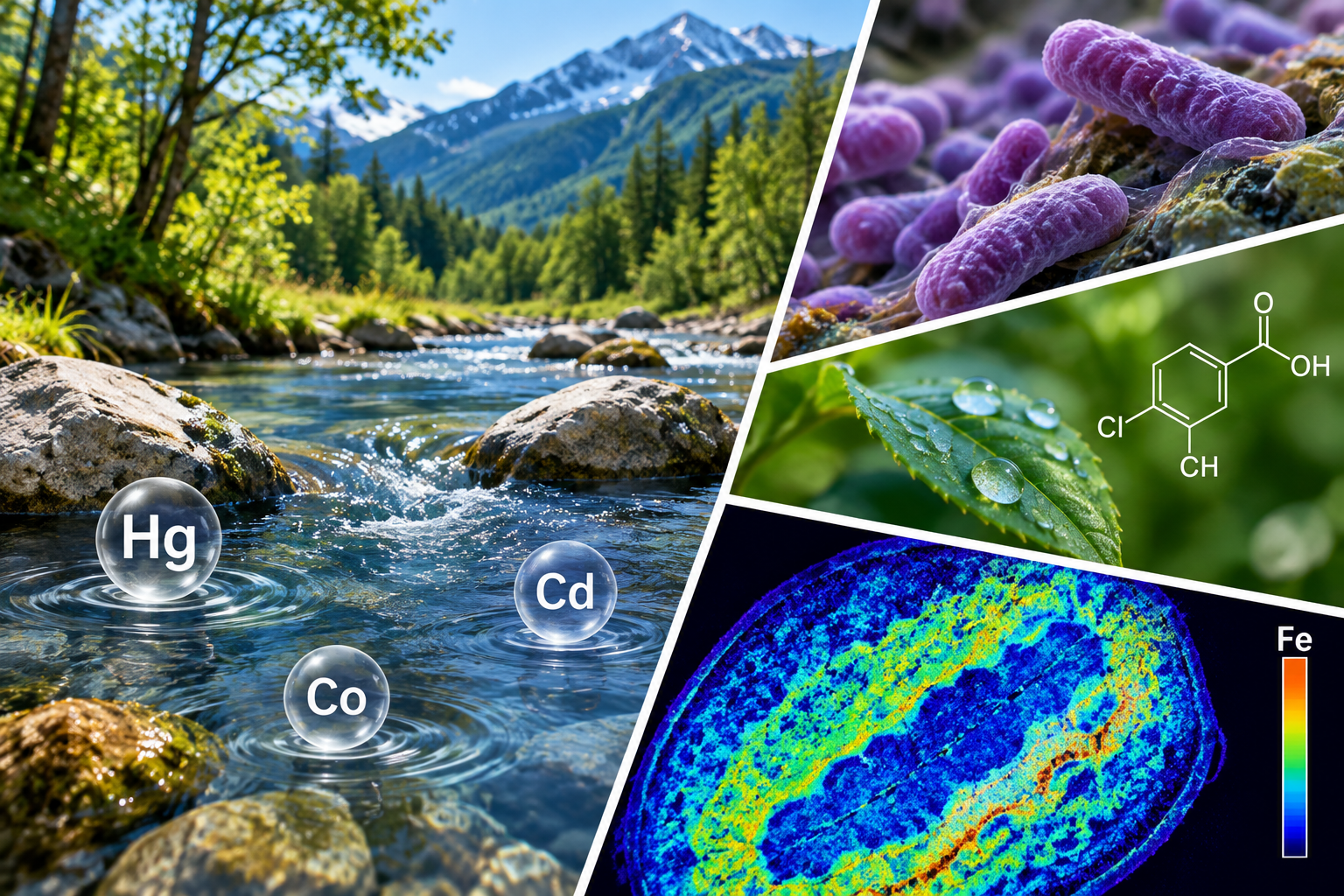
IPREM investigates the sources, transport, transformation and fate of chemical contaminants in natural ecosystems, combining environmental chemistry, biogeochemistry and microbial ecology.
Research focuses on mercury cycling, emerging organic pollutants and critical metals across aquatic and terrestrial environments. By integrating isotopic tracing, advanced chemical analysis and molecular microbiology, these studies reveal how microbial processes influence contaminant mobility, transformation, bioaccumulation and toxicity, from the molecular to the ecosystem scale.
Mercury biogeochemistry is a major research focus at IPREM, combining the expertise of chemists and microbiologists to investigate mercury sources, transformations, accumulation and detoxification across environmental compartments and food webs.
Multi-isotope approaches have been used to trace terrestrial, atmospheric and industrial mercury sources in the Baltic Sea. Research has also demonstrated the role of sulfur-metabolizing microbial communities in mercury methylation and demethylation, particularly in sulfur-rich hydrothermal environments.
Studies of microbial consortia associated with aquatic macrophytes have revealed complex interactions between microorganisms involved in methylmercury production. Metagenomic and metatranscriptomic approaches have further clarified the metabolic activities of microbial communities controlling mercury cycling in complex natural environments.
At the cellular scale, investigations using the model sulfate-reducing bacterium Pseudodesulfovibrio hydrargyri have identified mechanisms regulating methylmercury production, including intracellular mercury speciation, methylation by HgcAB proteins and methylmercury export.
Research also addresses mercury accumulation and detoxification in living organisms, particularly vertebrates such as seabirds, highlighting the protective role of selenium and mercury–selenium interactions.
These advances have contributed to the award of an ERC Consolidator Grant (SeMER) in 2024.
IPREM investigates the environmental fate and biological effects of emerging organic contaminants and critical metals in aquatic ecosystems.
Research on organic contaminants has examined the photodegradation of synthetic musks and the relationships between antibiotic resistance in marine bacteria and their potential ability to degrade these pollutants.
Studies on critical metals investigate their toxicity and interactions with microbial communities. In particular, research has demonstrated that cobalt exposure affects phototrophic microorganisms in freshwater biofilms, while revealing their capacity to develop adaptive responses.
These approaches contribute to a better understanding of the environmental behaviour and ecological impacts of emerging contaminants, combining chemical transformation processes with microbial responses.