


Multiscale chemical imaging
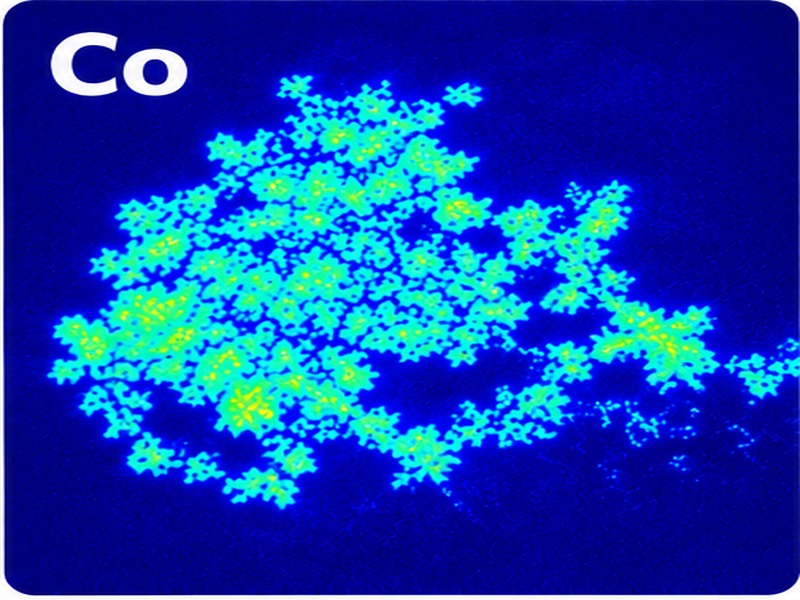
IPREM develops advanced elemental and isotopic imaging techniques to investigate the spatial distribution of chemical elements in complex biological, environmental and archaeological materials.
By combining laser ablation inductively coupled plasma mass spectrometry (LA-ICP-MS) and nanoscale secondary ion mass spectrometry (NanoSIMS), our research enables high-resolution elemental mapping, quantitative analysis and isotopic characterization at micro- and nanometric scales.
Development of high-resolution NanoSIMS methodologies to investigate the distribution of trace elements at the nanometric scale. Recent advances in ion source technology and mass resolution enable the detection and localization of mercury-containing particles in biological tissues, providing new insights into metal accumulation and transformation processes.
Development of quantitative multi-elemental imaging methods using laser ablation coupled with inductively coupled plasma mass spectrometry (LA-ICP-MS). Innovative sample preparation and internal standardization strategies improve the accuracy of elemental mapping in biological tissues, with applications to clinical and other complex samples.
Development of high-spatial-resolution isotopic imaging approaches combining femtosecond laser ablation, sector-field ICP-MS and image processing. These methods enable uranium–thorium (U–Th) dating of carbonate materials, including archaeological samples containing extremely low uranium concentrations.