


PCM Seminar - Pr Alejandro J. MüllerJeudi 12 février 2026, 14h00 - Amphi IPREM
Professor Alejandro J. Müller
IKERBASQUE Research Professor at POLYMAT and UPV/EHU
"Different crystallisation modes in random copolymers: Isomorphism, Isodimorphism, total comonomer exclusion and their combinations."
Combining properties of parent homopolymers can be achieved through random copolymerization. However, when the materials are semi-crystalline, complex behaviors can result. The structure and properties of semi-crystalline random copolymers (e.g., PA-ran-PB) depend on their chemical structure. Three main cases are described in the literature: (a) Isomorphism occurs when the chemical structures of PA and PB are very similar, allowing for complete inclusion of both comonomers in the crystal lattice or their miscibility in the crystalline state. (b) At the opposite extreme, when the structures differ greatly, the behavior is dominated by the exclusion of comonomer PB from the PA crystal lattice and vice versa, resulting in total exclusion. (c) Isodimorphic copolymers exhibit intermediate behavior where partial inclusion of comonomers occurs and crystallization can happen across the entire composition range. (d) Recently we have found combinations of the previous cases in some copolycarbonates. Isodimorphic copolymers show a pseudo-eutectic point when melting temperature is plotted against composition. To the left of this point, a crystal structure characteristic of PA forms; to the right, a PB-type crystal structure appears. The presence of this pseudo-eutectic point indicates that the melting temperature can be adjusted by the copolymer’s composition, as well as its crystallinity, crystal structure, and mechanical properties. This versatility makes isodimorphic copolymers ideal for many applications, from biodegradable films (like copolyesters) to thermoplastic elastomers, hot-melt adhesives, and tough semi-crystalline polymers. This seminar will discuss how chemical structure, molecular weight, and composition influence the structure, morphology, nucleation, and crystallization in a broad range of biodegradable isodimorphic copolyethers, copolyesters and copolycarbonates.
Selected References:
- Pérez-Camargo, R. A.; Arandia, I.; Safari, M.; Cavallo, D.; Lotti, N.; Soccio, M.; Müller, A. J.* European Polymer Journal, 2018, 101, 233–247 (April), “Crystallization of isodimorphic aliphatic random copolyesters: Pseudo-eutectic behavior and double-crystalline materials”.
- Pérez-Camargo, R. A.*; Safari, M.; Torres Rodríguez, J.; Liao, Y.; Müller, A. J.* Polymer, 2023, 287, 126412, 1-35 (November). “Structure, morphology and crystallization of isodimorphic random copolymers: Copolyesters, copolycarbonates and copolyamides”.
- Safari, M.*; Torres, J.; Pérez-Camargo, R. A.*; Martínez de Ilarduya, A.; Mugica, A.; Zubitur, M.; Sardon, H.; Liu, G.; Wang, D.; Müller, A. J.* Biomacromolecules, 2024, 25, 7392-7409 (November). “How the Aliphatic Glycol Chain Length Determines the Pseudoeutectic Composition in Biodegradable Isodimorphic poly(alkylene succinate-ran-caprolactone) Random Copolyesters”.
- Liao, Y.; Pérez-Camargo, R. A.*; Ma, T.; Maiz, J.; Martínez de Ilarduya, A.; Sardon, H.; Liu, G.*; Wang, D.; Müller, A. J.* Macromolecules, 2024, 57, 10227-10239 (November). “Mixed Isodimorphic/Isomorphic Crystallization in Aliphatic Random Copolycarbonates”.
- Pérez-Camargo, R. A.*; Torres, J.; Müller, A. J.* Polymer, 2025, 324, 128233, 1-19 (April). “Understanding even-odd effects in linear semi-crystalline polymers: Polyethers, polycarbonates, polyesters, and polyamides”.
- Torres-Rodríguez, J.; Pérez-Camargo, R. A.*; Shi, Y.; Wang, K.*; Jia, Y-G.; Zhu, X. X.; Müller, A. J.* Biomacromolecules, 2025, 26, 3446-3462 (June). “The Hidden Isodimorphic Crystallization of Poly(ԑ-caprolactone-ran-ω-pentadecalatone) Copolymers”.
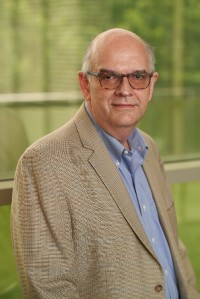
Short biography :
Professor Alejandro J. Müller is an IKERBASQUE Research Professor at POLYMAT and the Department of Polymers and Advanced Materials: Physics, Chemistry, and Technology within the Faculty of Chemistry at the University of the Basque Country UPV/EHU in Donostia-San Sebastián, Spain. He leads the Polymer Physics and Advanced Manufacturing research area at POLYMAT (https://www.polymat.eu/en/research/Polymer-Physics-Advanced-Manufacturing) and is the head of the Polymer Physics of Advanced Multiphasic Materials group.
His research interests include the structure, morphology, nucleation, crystallization, and crystallization kinetics of semicrystalline polymers and multiphasic materials, particularly polymer blends, block and random copolymers, biopolymers, and nanocomposites. Prof. Müller has received several awards, including the Lorenzo Mendoza Fleury Science Prize (Polar Prize) in Venezuela and the international Paul J. Flory Polymer Research Prize. He is a Corresponding Member of the National Academy of Engineering and Habitat of Venezuela (ANIH) and of the Latin American Academy of Sciences (ACAL). In July 2023, the municipality of Beijing, China, awarded him the "Zhongguancun Award for International Cooperation 2022" for his scientific collaboration with the Institute of Chemistry, Chinese Academy of Sciences (ICCAS). He has supervised 38 doctoral, 62 master's, and 96 undergraduate theses. Prof. Müller has delivered more than 120 plenary, keynote, and invited lectures across approximately 30 countries. He has co-authored more than 600 publications. He is an editor of the journal POLYMER (Elsevier), in the areas of Polymer Physics and Physical Chemistry.
Bibliometric data available at: https://scholar.google.com/citations?user=KFdB3igAAAAJ